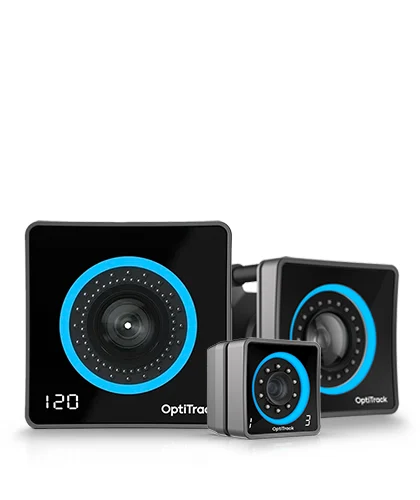
INDUSTRY SOLUTIONS | ROBOTICS & AUTOMATION
Sub-Millimeter Ground Truth & 6DoF Tracking for Autonomous Systems
Deploying precision 3D tracking for robotics is essential to accelerate development from simulation to physical validation. Tracklab delivers optical and inertial motion capture testbeds that supply drift-free ground truth, ultra-low-latency 6DoF telemetry, and native ROS/ROS2 streaming for robotic hands, aerial drones, bipedal humanoids, and autonomous vehicles across Australia and New Zealand.



Eliminating Drift in Sensor Fusion, State Estimation & Navigation Loops
Onboard perception pipelines, including visual SLAM, LiDAR odometry, and embedded IMUs suffer from drift, sensor degradation, and environmental occlusions. Validating complex state estimators and training machine learning policies demands an external reference system with an order of magnitude higher precision than the robot’s onboard sensor stack.
Bipedal Locomotion, Dynamic Balance & Kinematic Retargeting
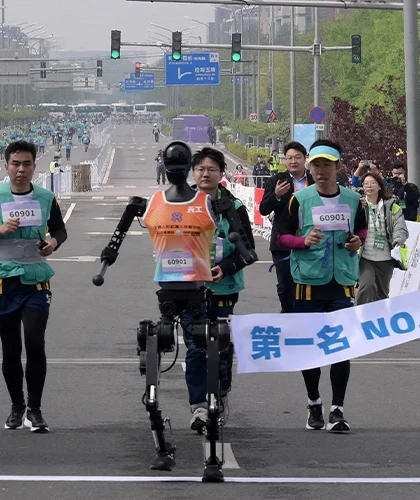
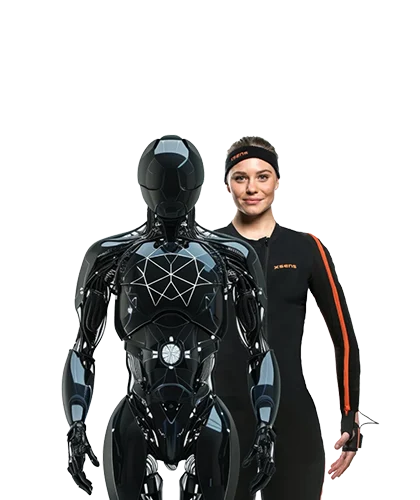
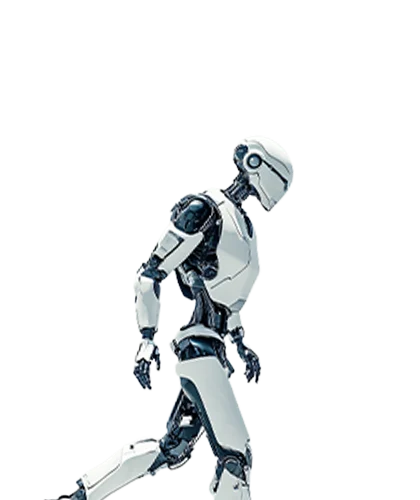
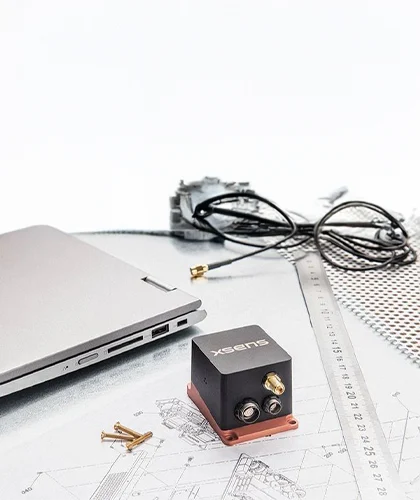
Developing bipedal platforms requires precise analysis of biological kinematics, center-of-mass (CoM) trajectories, and ground reaction forces. Tracklab combines optical multi-camera arrays and magnetic-immune Movella Xsens IMU suits to capture full-body kinematics for humanoid balance and locomotion synthesis.
Robotic Arms & Hands: TCP Calibration, Imitation Learning & Teleoperation
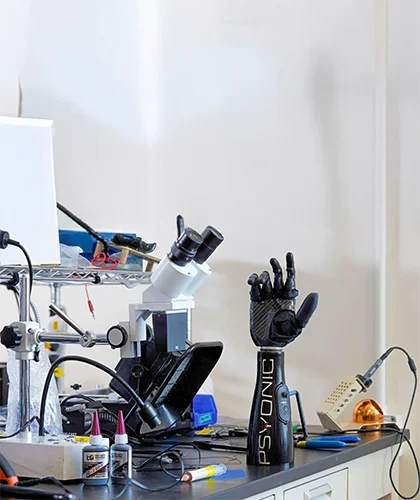
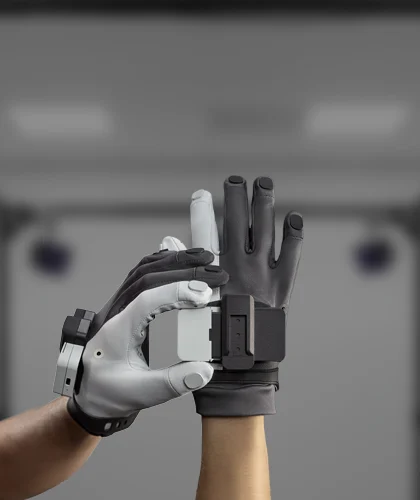
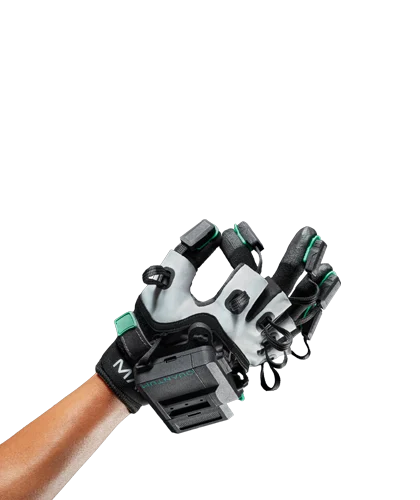
From multi-axis industrial robotic arms and collaborative cobots to dexterous multi-fingered hands, Tracklab delivers high-density optical tracking and sensorized Manus Data Gloves to measure micro-deflections, calibrate Tool Center Points (TCP), and record rich human demonstration datasets for AI policy training.
Large-Volume SLAM Benchmarking & Legged Terrain Locomotion
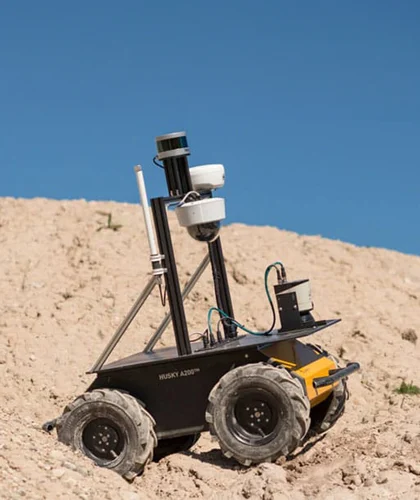
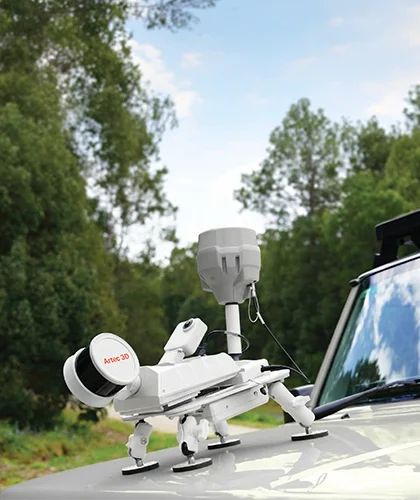
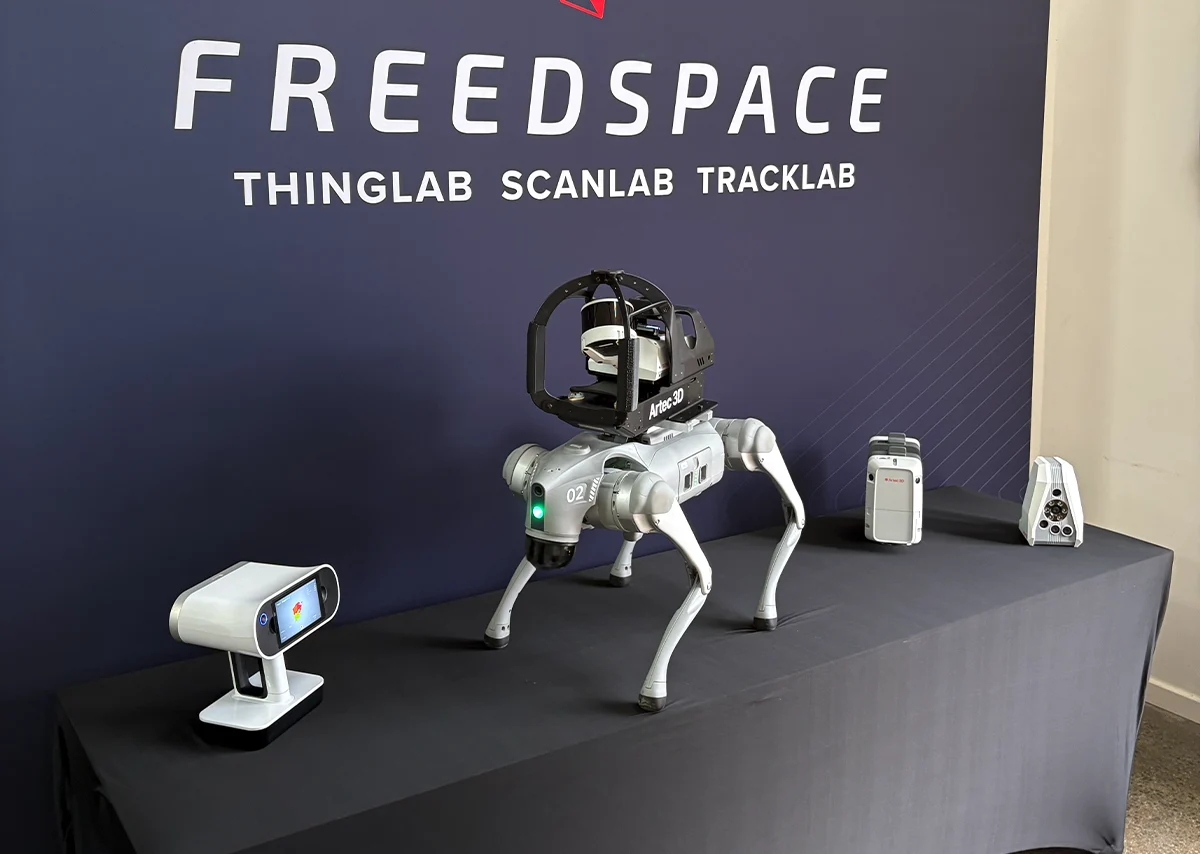
Verify autonomous navigation algorithms for wheeled AMRs, heavy industrial AGVs, and dynamic quadruped robots across large-footprint test environments. Implementing industrial-grade 3D tracking for robotics enables continuous, unoccluded ground-truth position and orientation data across multi-room or warehouse-scale facilities.
Indoor GPS-Denied Flight Positioning, Swarm Dynamics & Hover Control
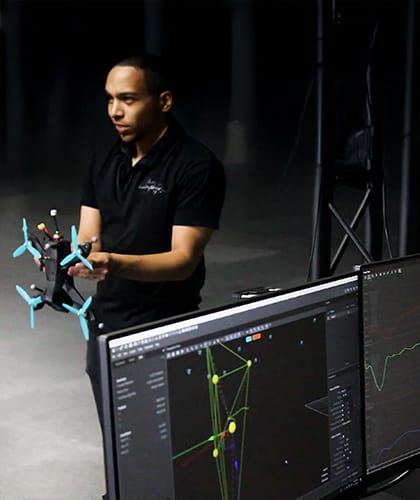
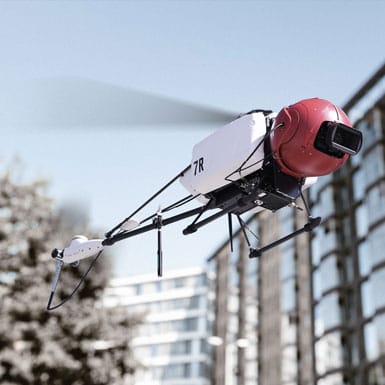
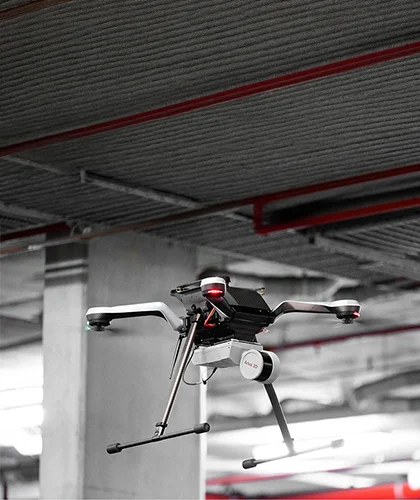
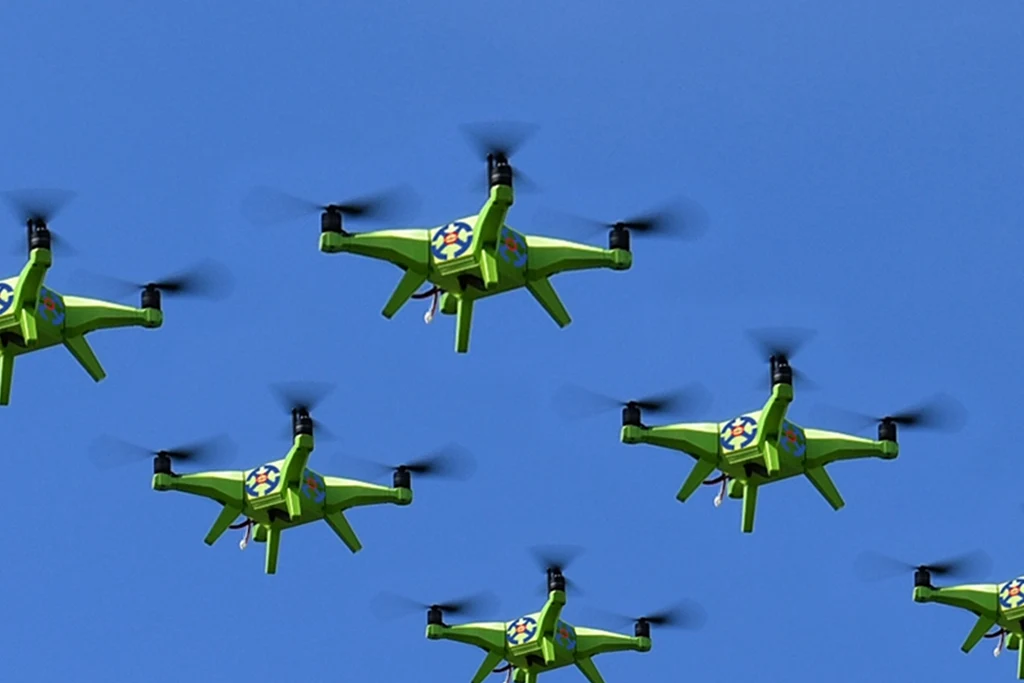
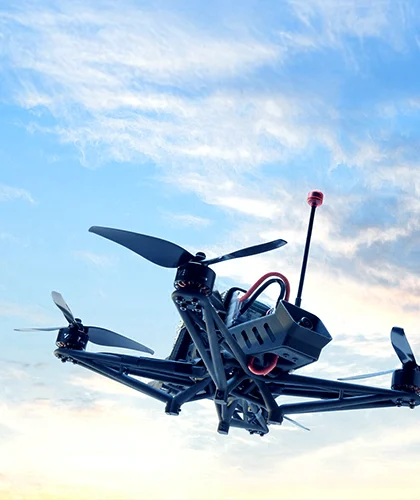
Indoor aerial testbeds require high-rate, millimetric positional feedback to substitute for satellite navigation. Tracklab designs multi-camera optical flight volumes that track dynamic multi-agent drone swarms with zero marker ID swapping.
Native Compatibility with Your Robotics Toolchain
Tracklab systems output clean, time-synchronized spatial data directly into your existing development stack without proprietary bottlenecks.
| Protocol / Framework | Integration Architecture | Supported Data Types |
|---|---|---|
| ROS & ROS2 | Native NatNet / VRPN drivers | geometry_msgs/PoseStamped, nav_msgs/Odometry, TF transforms |
| MATLAB & Simulink | Direct NatNet SDK & TCP/UDP streams | 6DoF rigid-body matrices, raw marker coordinates, IMU quaternions |
| Isaac Sim / Unreal / Unity | LiveLink & custom USD connectors | Real-time digital twin visualization, synthetic sensor ground truth |
| C++ / Python APIs | High-performance client libraries | Low-latency packet streaming (< 2 ms compute overhead) |
Local Systems Engineering
Based in Melbourne, our team provides site assessments, optical volume simulations, mechanical mounting design, and on-site calibration across ANZ.
Turnkey Testbed Delivery
We engineer and deploy the entire solution—from cameras, mounting trusses, and sync hubs to workstation configuration and ROS2 streaming nodes.
Authorised Technical Partner
Direct distributor and technical integrator for OptiTrack, Movella/Xsens, Manus, and Qualisys, providing local warranty support, spare parts, and vendor engineering escalation.
Commission Your Robotics Tracking Testbed
Whether you are designing a university drone arena, commissioning an industrial AMR benchmarking facility, or training imitation learning policies for manipulation, Tracklab’s motion capture engineers will scope a system built for your space, payload, and accuracy requirements.
Direct Contact:
Phone
+61 3 7018 2121
Email
tracklab@freedspace.com.au
Headquarters
Melbourne, Victoria, Australia
Robotics Motion Tracking & Ground Truth FAQ
While RTK-GNSS is effective outdoors, it cannot function in indoor test facilities and typically suffers from centimeter-level multipath errors near walls and metal structures. Visual SLAM and LiDAR odometry inherently drift over extended trajectories and dynamic scenes. Tracklab’s optical tracking systems (such as OptiTrack) operate independently of the robot’s onboard sensors, providing sub-millimeter positional precision (< 0.1 mm) and sub-0.1° orientation accuracy at refresh rates up to 360+ Hz, completely eliminating drift and environmental bias.
Tracklab systems stream 6DoF rigid-body poses and individual marker point clouds using low-latency NatNet or VRPN network protocols. In ROS and ROS2 environments, these streams map directly into standard message formats including geometry_msgs/PoseStamped, nav_msgs/Odometry, and standard TF transform trees (tf2). This allows flight controllers (like PX4/ArduPilot) and navigation stacks (like Nav2 or MoveIt) to consume absolute coordinates natively via local Ethernet or high-speed Wi-Fi.
Tracklab optical tracking testbeds achieve end-to-end latency below 5 milliseconds when paired with high-speed cameras (such as the OptiTrack PrimeX series running at 240 to 360+ FPS). This low latency enables closed-loop control applications, such as real-time indoor drone flight stabilization, high-speed collision avoidance, and haptic teleoperation of robotic manipulators.
Absolutely. We deploy two primary methods depending on swarm density:
- Passive Geometric Constellations: Unique spatial arrangements of retroreflective markers assigned to individual rigid bodies.
- Active Continuous-ID Markers: Infrared LED pucks that pulse unique digital signatures, allowing cameras to distinguish dozens of visually identical aerial drones or ground robots even when passing within millimeters of each other.
Tracking volumes can scale from compact desktop testbenches (1 m³) up to massive aircraft hangars and warehouse proving grounds exceeding 1,000+ m². By daisy-chaining synchronized cameras over standard gigabit PoE/PoE+ infrastructure, our engineering team designs multi-room and high-bay setups that provide continuous tracking handover across large-format facilities.
As the specialised 3D tracking division of Freedspace based in Melbourne, Tracklab delivers complete turnkey services across Australia and New Zealand. This includes pre-installation camera volume simulations (CAD/FOV modeling), mounting truss design, hardware commissioning, ROS/workstation network configuration, system calibration, and post-installation technical training.