ROBOTICS & AUTOMATION | HUMANOID & BIPEDAL SYSTEMS
Precision Motion Capture & Dynamic Ground Truth for Humanoid Robotics
Advancing bipedal mobility demands real-time spatial telemetry and validated physical kinematics. Tracklab delivers purpose-built humanoid robotics mocap architectures combining high-density optical camera volumes, magnetic-immune wearable IMUs, and force plate synchronisation. Measure center-of-mass trajectories, capture full-body demonstration data for imitation learning, and validate closed-loop balance algorithms across Australia and New Zealand.




Bridging Biological Motion and Multi-DoF Robotic Actuation
Humanoid robots operate with dozens of highly articulated degrees of freedom (DoFs) subject to unstable inverted pendulum dynamics. Onboard joint encoders, foot force sensors, and embedded IMUs suffer from accumulative state estimation drift and dynamic contact shocks.
To synthesize stable bipedal gaits, train neural motor policies, or benchmark push-recovery controllers, engineering teams require an external reference frame. Tracklab’s humanoid robotics mocap platforms deliver sub-millimeter positional ground truth and drift-free angular kinematics, enabling you to isolate algorithmic control errors from physical structural compliance.

Sub-Millimeter End-Effector & Pelvis Tracking (< 0.1 mm)
Accurately measure 6DoF center-of-mass (CoM) drift, pelvis tilt, and swing-foot ground clearance.
High-Rate Joint Angular Velocity Capture (Up to 360+ Hz)
Track high-speed impact transients during foot-strike transitions without motion blur.
Synchronized Kinetic & Kinematic Data Streams
Integrate optical 6DoF markers, IMU attitude, and Bertec/AMTI force plates into a single synchronised clock domain.
Specialised Motion Capture Applications for Bipedal Systems
Swing-Foot Ground Clearance Tracking.
Measure sub-millimeter clearances during swing phases to prevent dynamic trip events on uneven surfaces.
Center of Mass (CoM) & Pelvis State Estimation
Provide independent 6DoF telemetry of the pelvis and trunk to benchmark Kalman-filtered state estimators.
Ground Reaction Force Integration
Synchronise optical foot marker tracking with multi-axis force plates to calculate exact Center of Pressure (CoP) and joint torques.
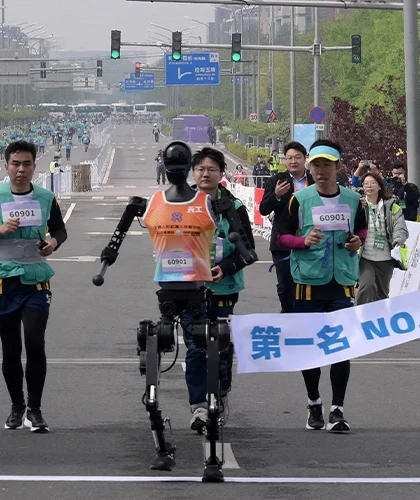

Perturbation Trajectory Logging
Quantify post-impact deflection, recovery step placement, and settling time when external lateral or frontal forces are applied.

Shock-Immune Inertial Measurement
Deploy industrial-grade Movella/Xsens IMUs that maintain accurate angular tracking through severe mechanical shocks and vibration.

Multi-Body Segment Deflection
Detect torsional flex and joint backlash across carbon-fiber and titanium limb segments under sudden dynamic loading.
Purpose-Built Tracking Modalities for Humanoid Development
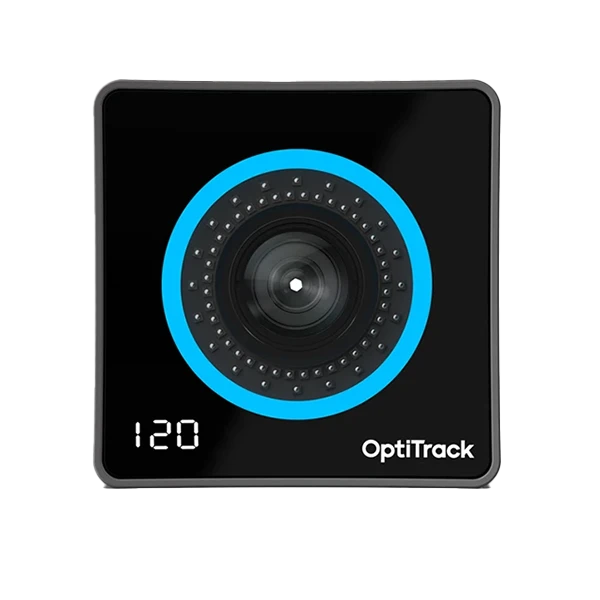
OptiTrack PrimeX Optical Series
Key Specifications:
- Position Resolution: Sub-millimeter precision (< 0.1 mm 3D residual error)
- Frame Rates: 240 FPS to 360+ FPS native capture
- Latency: < 4.2 ms overall system latency
- Field of View: Up to 70° wide-angle lenses for compact high-bay volumes
Humanoid Capabilities:
- Tracks multi-segment rigid body clusters across pelvis, thighs, shins, and feet simultaneously.
- High frame rate prevents marker blurring during high-acceleration foot strikes.
- Works with Active LED continuous-ID markers to eliminate marker swapping during complex limb crossings.
Movella / Xsens Link & Awinda IMU Suits
Unrestricted outdoor locomotion, rough-terrain trials, stair navigation, and continuous human operator teleoperation.
Key Specifications:
- Tracking Modality: 17 MEMS inertial sensor modules (accelerometers, gyroscopes, magnetometers)
- Sample Rate: Up to 240 Hz internal update rate
- Immunity: Full magnetic immunity algorithms (A-Winda / Link onboard buffering)
- Range: Up to 150 m line-of-sight wireless transmission
Humanoid Capabilities:
- Zero line-of-sight constraints—immune to marker occlusion caused by external payloads, harnesses, or safety cranes.
- Real-time calculation of all 23 human skeletal segments and joint angles.
- Low-profile lycra harness fits comfortably under safety harnesses or can be mounted to external humanoid frames.
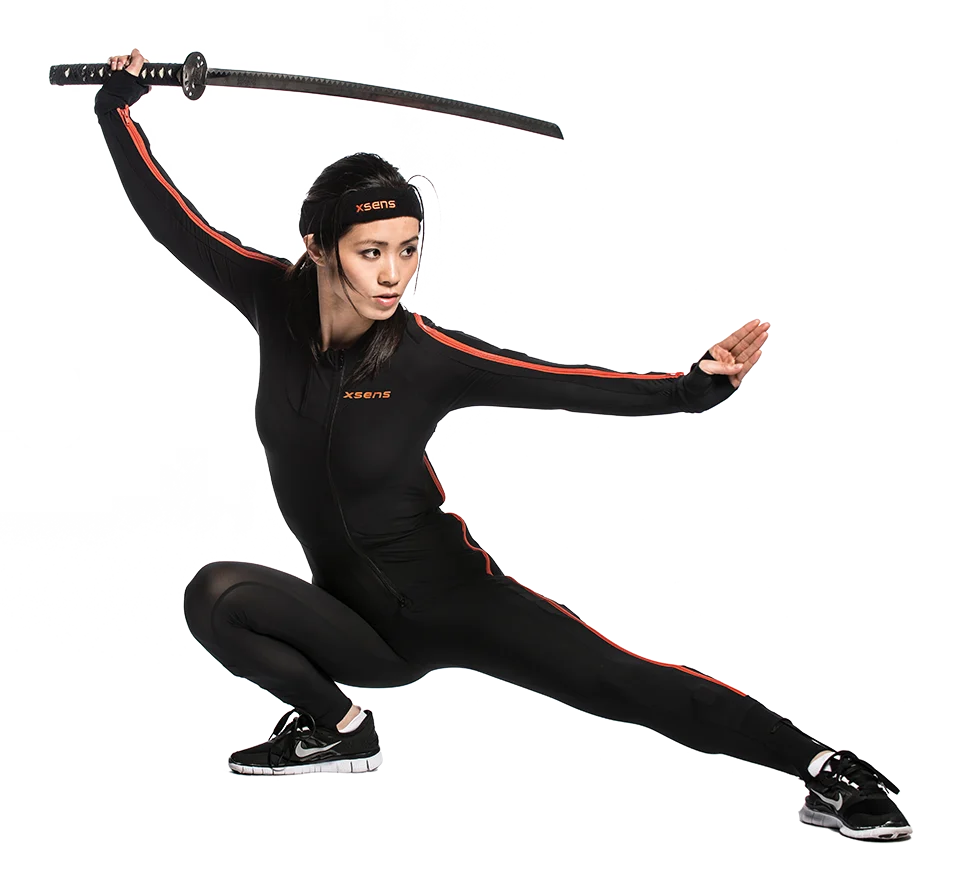
Xsens Link
Using Xsens Link for humanoid robotics to capture studio-grade motion data anywhere with unparalleled freedom and accuracy. View the Xsens Link
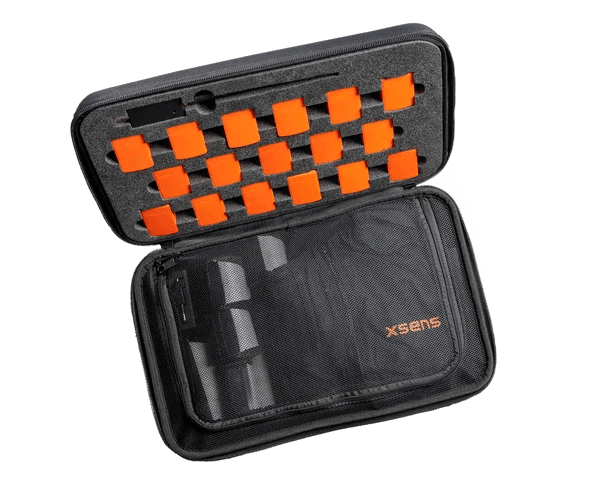
Awinda IMU Suits
With an impressive wireless range of up to 50 meters, the MVN Awinda system offers freedom of movement and can be reliably used in a wide variety of environments and applications. View Awinda IMU Suits
Manus Metagloves (Quantum & Prime Series)
Human-in-the-loop telemanipulation, bi-manual grasping demonstrations, and imitation learning dataset capture.
Key Specifications:
- Sensor Type: Quantum sub-millimeter magnetic induction / flex sensor hybrids
- Degrees of Freedom: Full 16-DoF finger tracking per hand (individual phalange pitch, yaw, and splay)
- Latency: < 5 ms wireless latency
- Battery Life: Up to 4 hours hot-swappable continuous operation
Humanoid Capabilities:
- Captures micro-movements of operator fingers to control multi-articulated humanoid hands (e.g., Shadow Hand, Inspire-Robots, Fourier).
- Records detailed joint angle matrices for training vision-language-action (VLA) and reinforcement learning models.
- Integrates directly with OptiTrack wrist markers and Xsens arm tracking for unified arm-hand telemetry.
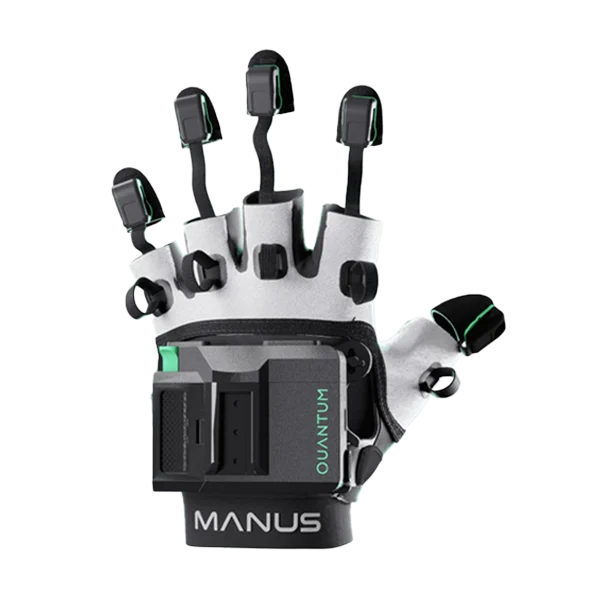
Manus Quantum Meta gloves
Manus’ haptic Manus Quantum Metagloves deliver sub-millimeter precision hand tracking and lifelike tactile feedback, revolutionising gaming, professional training, and virtual collaboration. View the Quantum Meta gloves
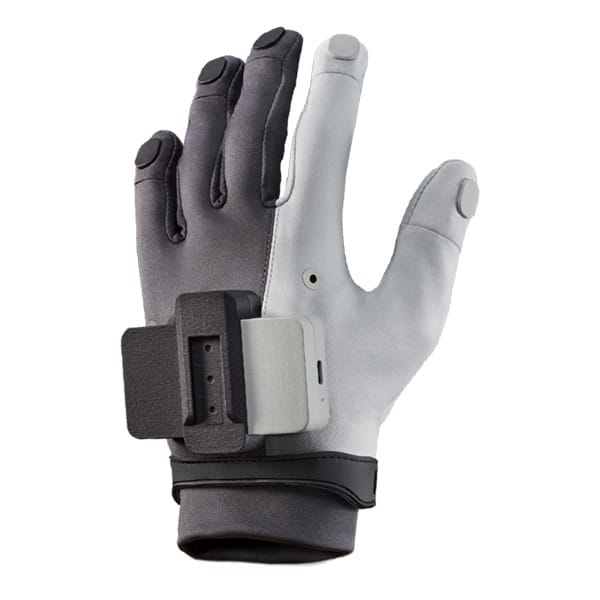
Manus Meta gloves Pro
Experience the future of motion capture with unparalleled precision and a workflow designed for professionals. View the Manus Meta gloves Pro
Theia3D Markerless Biomechanics System
Non-intrusive human operator capture, rapid imitation learning trials, and unencumbered ergonomic interaction.
Key Specifications:
- Input Type: Multi-view 2D high-framerate synchronized video streams
- Tracking Output: 3D skeletal kinematic models with true 6DoF joint center estimation
- Markers Required: Zero (no suits, retroreflective dots, or harnesses)
- Standard: Biomechanically validated against gold-standard optical marker sets
Humanoid Capabilities:
- Allows human demonstrators to demonstrate tasks completely unencumbered by wearables or wires.
- Eliminates marker falling-off errors during fast, dynamic human trials.
- Simultaneous recording of visual video ground truth alongside 3D joint coordinate outputs.
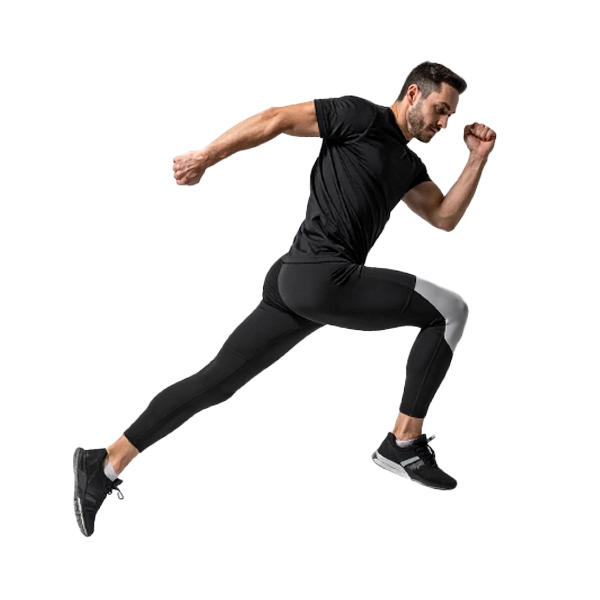
Theia3D
a sophisticated software solution designed to deliver highly accurate, three-dimensional biomechanical data without the need for physical markers. Request Theia3D Consultation
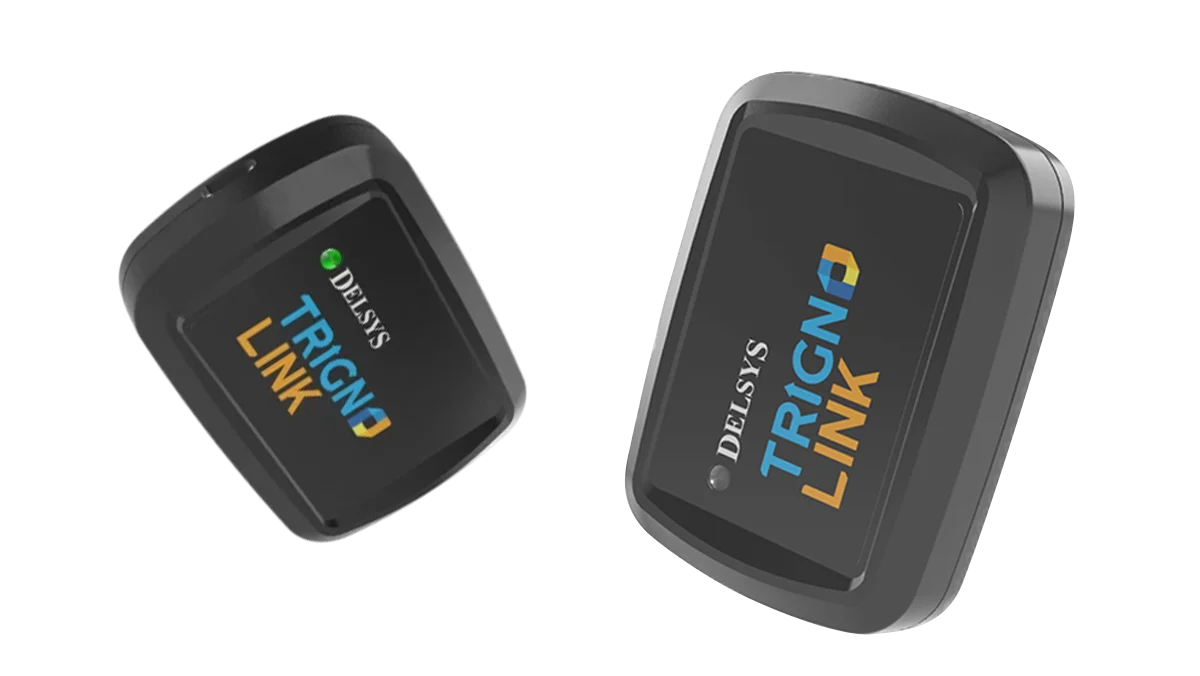
Delsys Trigno Link
You can seamlessly synchronize high-fidelity wireless EMG with a full spectrum of physiological sensors Delsys Trigno Link consultation
Direct Data Streaming into Humanoid Control Workflows
| Architecture / Framework | Connection Method | Delivered Data Structure |
| ROS & ROS 2 (Humble/Iron) | Native NatNet / VRPN nodes | sensor_msgs/JointState, geometry_msgs/PoseStamped, TF2 tree |
| Simulation (Isaac Sim / MuJoCo) | LiveLink / USD / Python API | Rigid-body transforms, full-body skeleton joint angles, collision hulls |
| MATLAB & Simulink | Direct NatNet SDK & TCP/UDP | 6DoF kinematic matrices, quaternions, time-stamped analog sync |
| C++ & Python SDKs | High-performance client libraries | Low-overhead packet streaming (< 2 ms compute overhead) |
Direct Data Streaming into Humanoid Control Workflows
Onboard joint encoders only measure relative angle between links—they cannot detect structural flexion, gear backlash, or foot slip against the ground. Embedded IMUs drift over time and struggle during high-frequency foot-strike impacts. External optical motion capture provides an absolute global coordinate system with sub-millimeter precision, allowing you to accurately benchmark state estimators and calculate true center-of-mass positions.
Bipedal platforms create frequent self-occlusions as limbs cross or interact with payloads. We solve this by:
- Supplementing optical systems with wearable IMUs (Xsens) for continuous kinematic continuity regardless of line-of-sight.
- Designing redundant multi-camera arrays (typically 8 to 24+ cameras) providing continuous multi-angle coverage.
- Utilizing Active LED continuous-ID markers, which pulse unique infrared signatures so cameras never lose track of a marker identity even when briefly occluded.
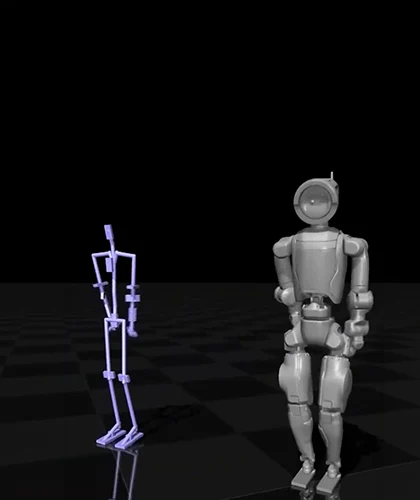
Yes. Tracklab systems provide low-latency Python APIs, C++ SDKs, and ROS 2 bridges that feed directly into physics simulators such as NVIDIA Isaac Sim, MuJoCo, and PyBullet. This allows researchers to capture real human motor trajectories and directly retarget them into virtual humanoid policy networks for reinforcement learning and sim-to-real transfer.
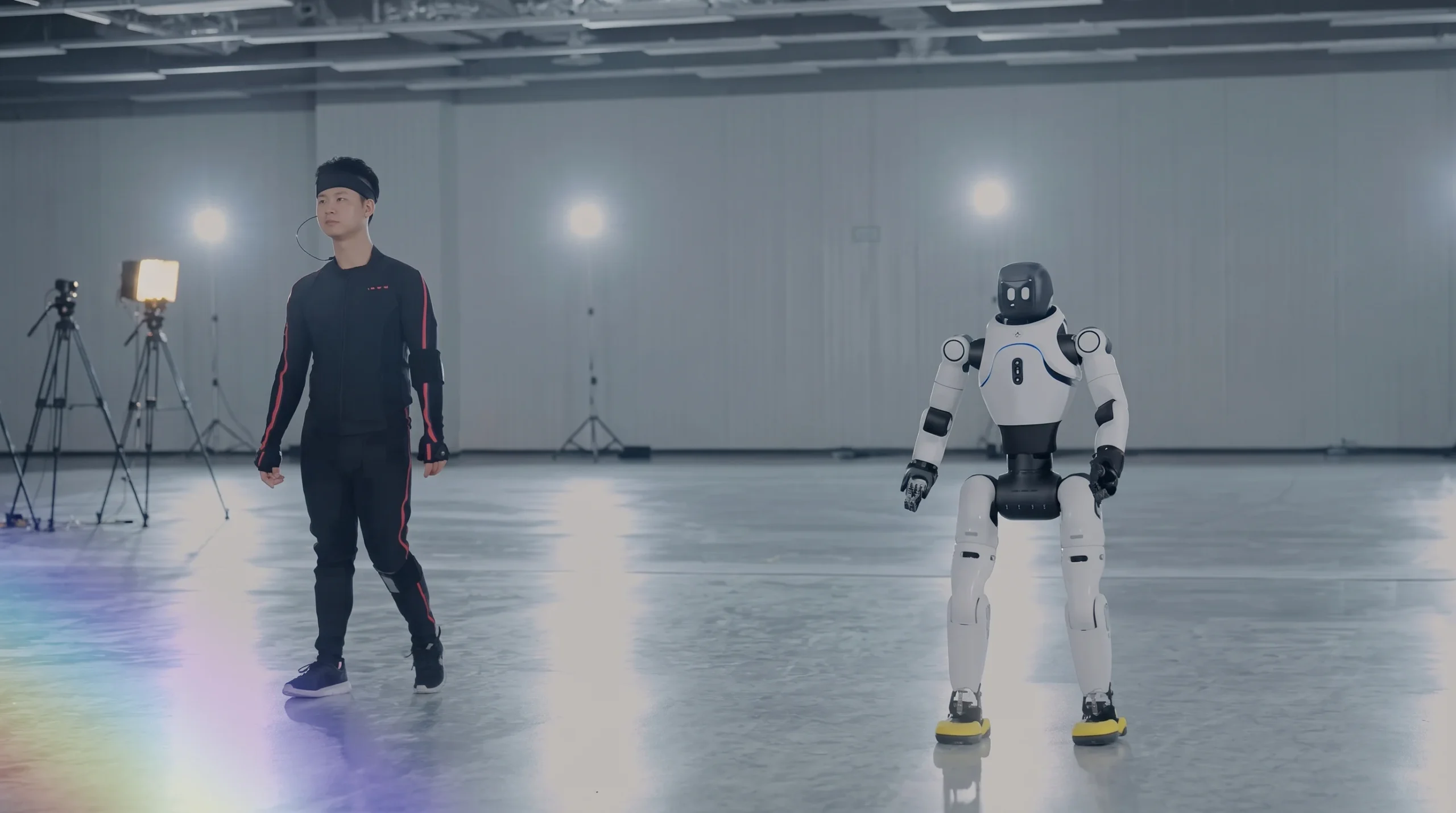
Yes. The software architecture supports simultaneous multi-body tracking. A human operator wearing an optical suit or sensorized gloves can be tracked in the exact same physical and spatial coordinate frame as the humanoid robot, which is ideal for real-time teleoperation, leader-follower trials, and collaborative ergonomics studies.
Build Your Humanoid Robotics Tracking Testbed
Whether you are designing a dynamic walking arena, instrumenting a high-speed perturbation treadmill, or capturing rich human imitation learning datasets, Tracklab’s Melbourne-based engineering team delivers turnkey tracking solutions tailored to your lab’s footprint and dynamic performance requirements.
Talk to an expert today, just call 03 7018 2121 or email us at info@tracklab.com.au.